 Oncosphere
Organ-preservation pathway: MSI-H / dMMR rectal cancer
Educational illustration only (added 5 Nov 2026). Numbers are copied from the Oncosphere [dostarlimab trial post](/dostarlimab-msi-h-rectal-cancer/), which cites the FDA approval notice, the Jemperli US prescribing information (10/2026), and Cercek et al. in NEJM 2022 and 2025. This is not a treatment algorithm for an individual patient.
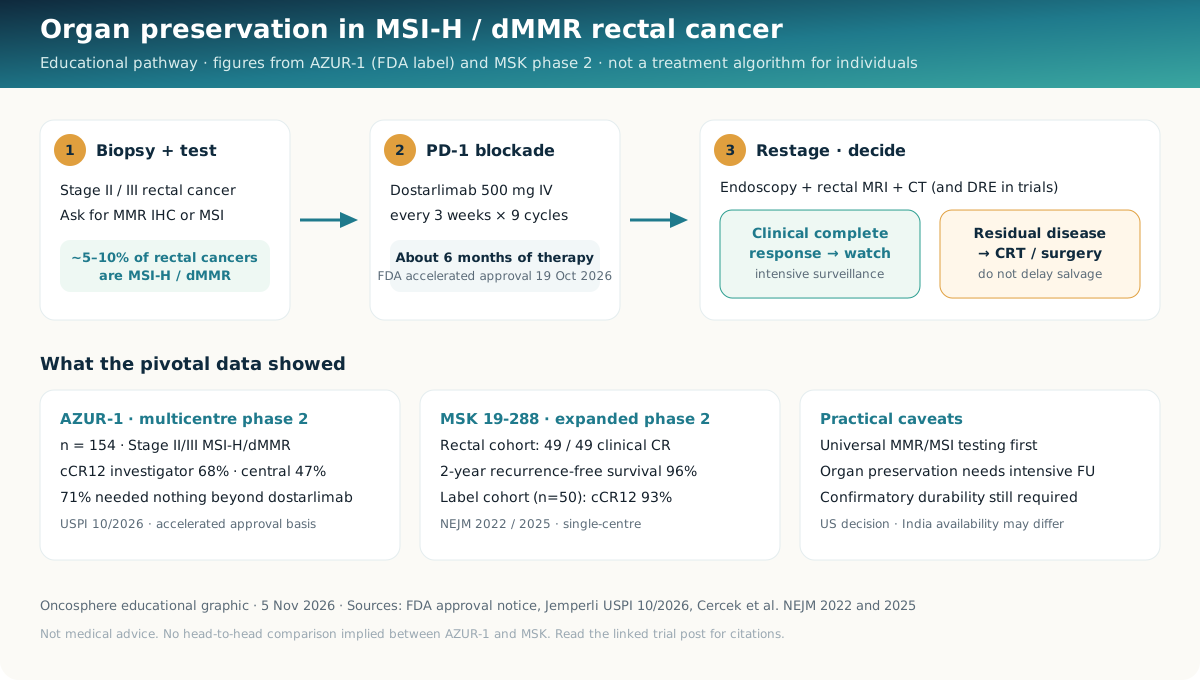
How to read the figure
- Biopsy + test. About 5–10% of rectal cancers are MSI-H or dMMR. Universal MMR immunohistochemistry (or MSI testing) is the gate.
- PD-1 blockade. Label dose in the accelerated approval is dostarlimab 500 mg IV every 3 weeks for 9 cycles (about 6 months).
- Restage · decide. Clinical complete response can allow intensive watch-and-wait surveillance; residual disease needs salvage chemoradiation or surgery without delay.
Where the numbers come from
- AZUR-1 (pivotal multicentre phase 2, n=154): investigator-assessed 12-month sustained clinical complete response 68%; independent central review 47% (immature); 71% needed nothing beyond dostarlimab at the reported cut-off.
- MSK expanded phase 2 (NEJM 2025): rectal cohort 49/49 clinical complete responses; 2-year recurrence-free survival 96%. Label cohort (n=50): cCR12 93%.
Full tables, safety, post-marketing requirements and India context: Dostarlimab MSI-H/dMMR rectal cancer post. Related: FDA oncology approvals, October 2026 · Infographics gallery.